Reflection instead of Isolation*
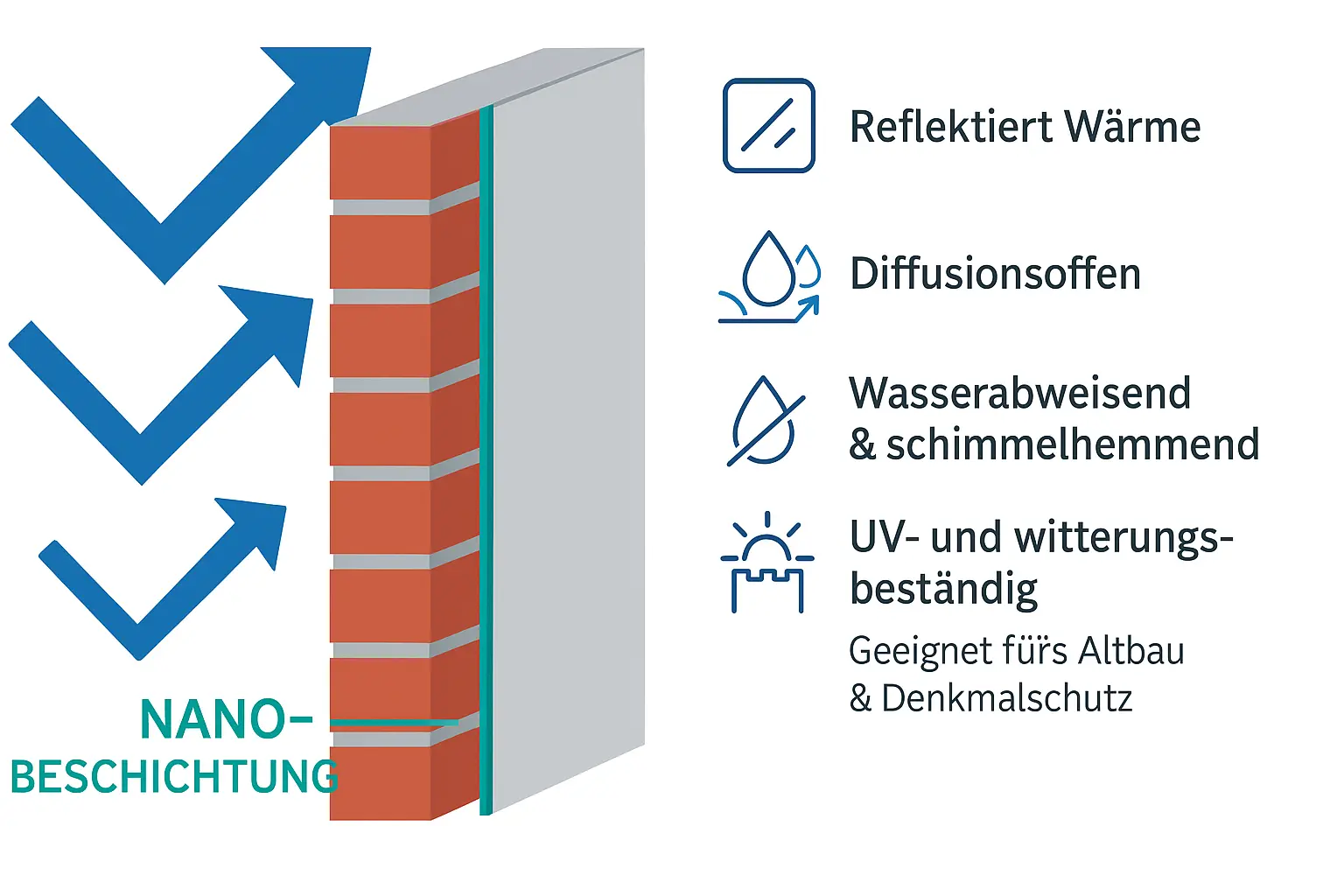
Due to the reflective properties of the coating, an insulation layer does not heat up; rather, the thermal radiation cannot penetrate the barrier of the coating.
This significantly reduces the deposition of moisture, which can help prevent mould formation.
Product Information Registration Product Presentation*Insulation is the common term, here it refers to thermal insulation.

Nanotechnology
Our insulation is based on a ultra-thin coating made from billions of ultra-fine nanoparticles. When sprayed on, these particles form a seamless micro-layer that minimises heat loss without the need to build up or tear down the façade. The nanoparticles reflect thermal energy in both directions, ensuring that less heating energy escapes in winter and that the façade surface remains dry and breathable in summer. This way, you achieve maximum energy savings with minimal material usage.
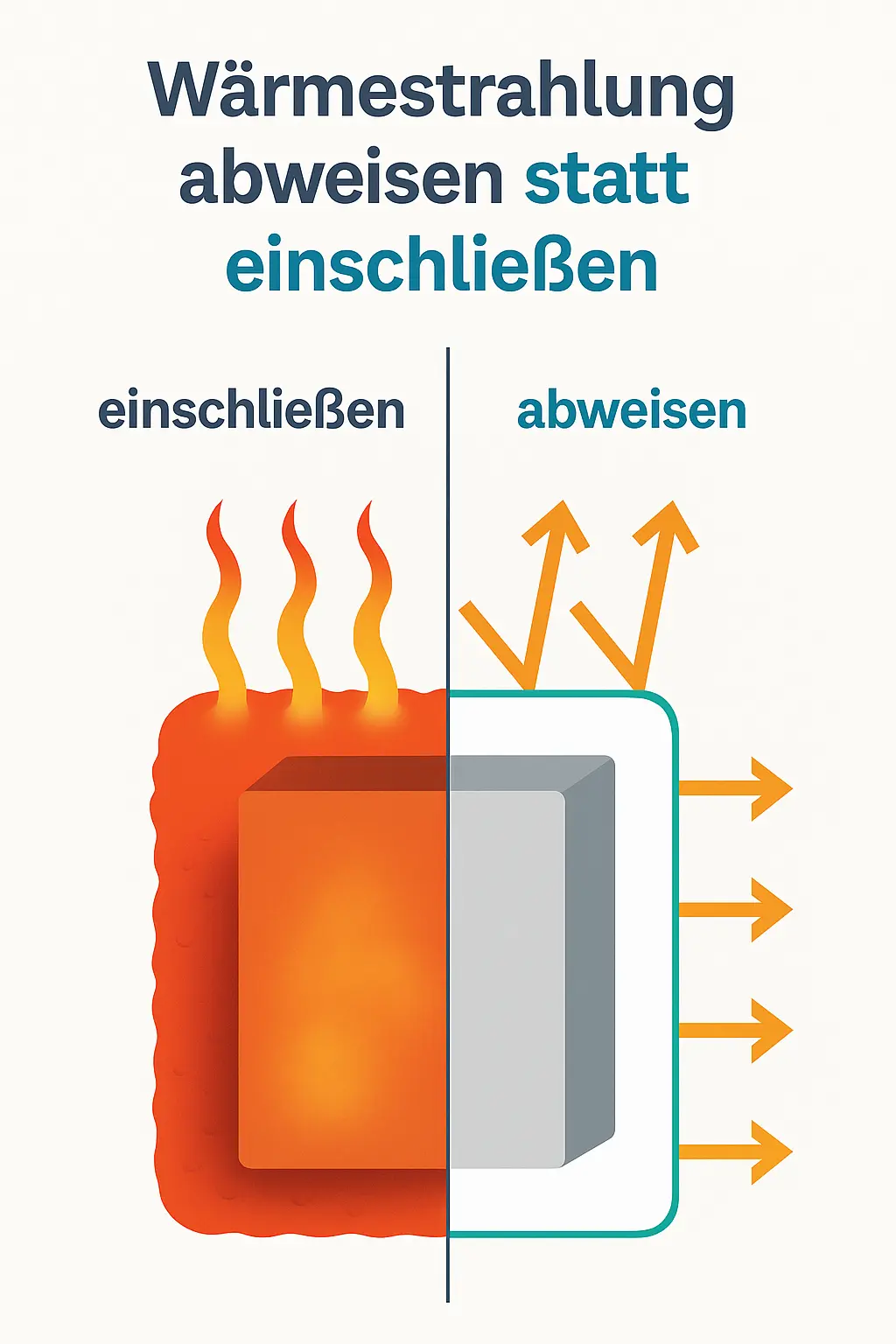
Reject heat radiation instead of enclosing it.
The conventional concept of insulation is based on the principle of containment – usually through thick insulating layers. Our nanocoating takes a different, significantly more efficient approach: it reflects thermal energy directly at the surface – before it can even penetrate the component.
How does it work?
The coating consists of billions of finest hollow body particles that physically reflect thermal radiation – similar to a mirror. No classic "storage mass" is created, as with conventional insulation. Instead, the coating forms a thin yet effective reflective barrier against heat.
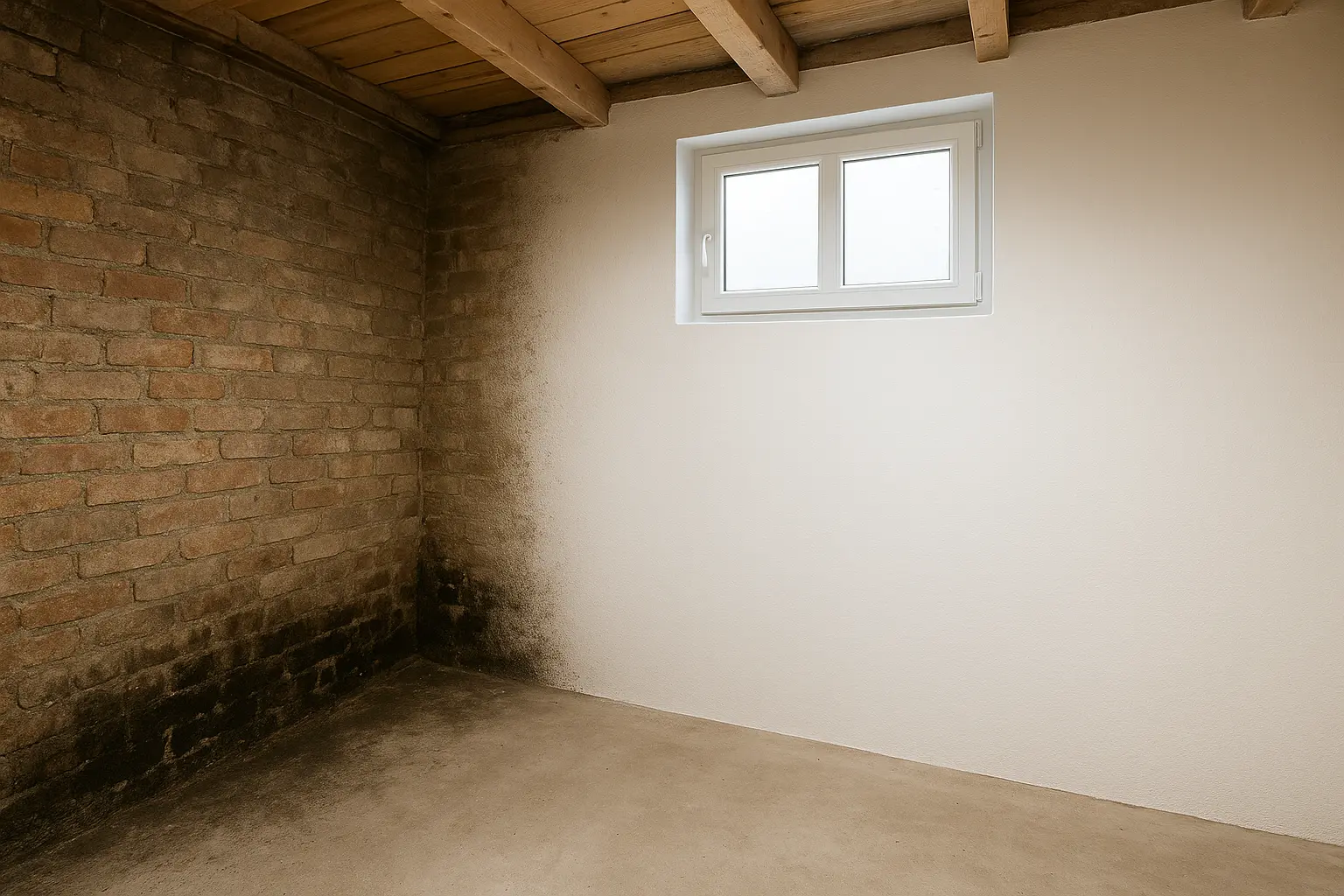
Weniger Abkühlung der Innenwand = weniger Feuchtigkeit
As the wall or ceiling heats up significantly less due to this effect, there is also hardly any condensation on the surface – a key factor in preventing moisture and mould.
This means for you:
- Dry surfaces – also in basements and roof areas
- Less building damage due to condensation
- Sustainable protection without films or ventilation systems
- More hygiene and living comfort

Overview of Benefits
🔹 Reduces condensation risk on cold interior surfaces
🔹 Prevents mould growth sustainably
🔹 Solvent-free & low-emission – ideal for indoor use
🔹 Usable on walls, ceilings, pipes and more

Where is this technology used?
✔️ External facades of buildings
✔️ Internal walls facing north
✔️ Basement ceilings & unheated cavities
✔️ Roof slopes & storage floors
✔️ Installation shafts, technical rooms
✔️ Industrial plants & pipelines with temperature differences
Der physikalische Effekt, der Kudsen-Effekt:
Die Nano-Fassadendämmung basiert auf einer hierarchischen Struktur aus Glaskeramik-Vakuum-Nanosphären in Silizium-Mikrosphären - eine revolutionäre Kombination, bei der die Silizium-Mikrosphären als Trägerstruktur im Acrylharz fungieren und die Glaskeramik-Vakuum-Nanosphären für die eigentliche Hochleistungsdämmung sorgen. Diese innovative Technologie nutzt drei physikalische Prinzipien gleichzeitig:
1. Knudsen-Effekt: Keine Übertragung thermischer Energie durch Gas
Die hierarchische Struktur verstärkt den Dämmeffekt erheblich: Glaskeramik-Vakuum-Nanosphären sind in größere Silizium-Mikrosphären eingebettet und enthalten Vakuum oder extrem wenig Gasmoleküle. Der Knudsen-Effekt tritt auf, wenn die Hohlräume kleiner sind als die mittlere freie Weglänge der Gasmoleküle - das sind bei normalen Gasen nur wenige Nanometer.
Was passiert: In so kleinen Räumen können die Gasmoleküle nicht mehr frei kollidieren und thermische Energie übertragen, sondern stoßen hauptsächlich an die Wände. Die Kombination aus Mikro- und Nanosphären schafft mehrfache Barrieren und verstärkt diesen Effekt durch verschiedene Größenordnungen von Hohlräumen.
2. Glaskeramik: Minimale Leitung bei maximaler Stabilität
Warum Glaskeramik ideal ist: Glaskeramik wird zunächst als Glas hergestellt und dann kontrolliert kristallisiert. Dadurch vereint sie die Formbarkeit von Glas mit der mechanischen Festigkeit und Temperaturbeständigkeit von Keramik.
Das Ergebnis: Extrem dünne, aber dennoch stabile Wandungen der Nanosphären, die den Vakuumdruck aushalten und minimale Leitung thermischer Energie ermöglichen.
3. Thermoreflexionstechnologie: Strahlung wird reflektiert
Die Nano-Beschichtung nutzt Thermoreflexionstechnologien und reflektiert >93% des sichtbaren Lichts inklusive UV- und IR-Strahlung. Die hierarchische Struktur wirkt wie ein System aus winzigen Spiegeln und wirft thermische Strahlung zurück, statt sie zu absorbieren und weiterzuleiten.
Das Ergebnis: 300-fache Dämmwirkung bei 1 mm Dicke
Durch die gleichzeitige Blockierung aller drei Übertragungswege thermischer Energie erreicht die Nano-Fassadendämmung eine außergewöhnliche Dämmwirkung bei minimaler Schichtdicke. Mit nur 1mm Dicke dämmt die Nano-Fassadendämmung 300x stärker als herkömmliche Dämmstoffe.
Zusammenfassung: Hierarchische Struktur blockiert alle drei Übertragungswege thermischer Energie
- Konvektion → Knudsen-Effekt in Mikro- und Nanosphären verhindert Übertragung thermischer Energie durch Gasteilchen
- Strahlung → Thermoreflexionstechnologie reflektiert >93% der Strahlung
- Leitung → Hierarchische Struktur aus verschiedenen Materialien minimiert direkten Transport thermischer Energie
Frequently Asked Questions
If you have any further questions, you can request our product information here.
Classic insulation materials store heat – they act like a thermal brake. Our nano-coating reflects thermal radiation directly at the surface. As a result, no energy is "collected" in the material, but is instead immediately reflected back.
Yes. The physical effect of heat reflection achieves a significant reduction in heat loss with just a few millimetres – particularly with heating heat, that is, infrared radiation.
Yes. As the surface warms up less, less moisture condenses. This significantly reduces the risk of mould formation – especially in cold areas such as basement ceilings or external walls.
Absolutely. The coating is emission-free, odourless, solvent-free, and health-safe. It is ideally suited for living areas, bedrooms, children's rooms, or even commercially used interiors.
Would you like a quote?
We would be happy to provide you with a non-binding offer.